
Union Hill-Novelty Hill Previous-Resident Sources
Different eras leave different evidence of previous residents in Union Hill-Novelty Hill. Start with the current parcel report because its ten-digit parcel number and legal description can survive changes in postal wording. A deed identifies parties to a transfer, not every occupant. Directories, census schedules, property cards, newspapers, and probate files add the household and life-event layers.
| Source | Years It Covers | Where Held | What It Shows |
|---|---|---|---|
| Landmark deed index | 1976-present; most images August 1, 1991+ | King County Recorder | Parties, dates, instruments, legal descriptions |
| General Recordings Index | 1853-1975 | King County Archives microfilm | Older recording leads and book/page references |
| Property cards | 1937-1972 series | WA State Archives, Puget Sound Branch | Building photo or sketch, construction and assessment clues |
| Regional directories | SPL digitized run 1867-1940; 1928 reverse volume | SPL, KCLS, Archives | Names, addresses, routes, and household context |
| Federal census | Released after 72 years | Library genealogy databases and archives | Household members near an address or route |
For a recent transfer, begin online. Before 1976, move from Landmark's last usable deed to Archives. For an early twentieth-century household, pair a directory or census entry with the parcel's legal description and a property card. The Puget Sound Regional Branch holds King County property cards, voter materials, probate indexes, directories, and census sources.
Trace Union Hill-Novelty Hill Previous Residents
The deed chain gives the ownership spine for previous-resident research. Pull the current parcel in King County eReal Property, then search the parcel and party names in Landmark Web. Save the legal description, recording number, date, and document type at every turn. A deed of trust is financing evidence; an assignment or reconveyance is not automatically an ownership transfer.
- Save the parcel ID, situs address, mailing address, and legal description from eReal.
- Find the newest transfer deed by parcel and current grantee. Record both parties and the instrument number.
- Search the seller as an earlier grantee. Compare dates and legal descriptions before joining the records.
- Follow cited plats, short plats, easements, and prior recording numbers when the lot changed shape.
- At the 1976 index boundary, use the Archives name/date index and microfilm, preserving reel, year, and page.
- Grantor / grantee
- The grantor gives an interest in land; the grantee receives it.
- Chain of title
- The linked sequence of recorded transfers for the same property.
- Legal description
- The land description in the record, often more stable than a street or rural-route label.
Union Hill-Novelty Hill Previous-Resident Cutoffs
King County's online name index begins in 1976, but most document images begin on August 1, 1991. Those are two different limits. A successful index hit may still require a copy request or a microfilm visit. Parcel searches are weaker farther back because consistent parcel indexing begins only around 2002.
The Property Owner Alert illustrates the county's name-or-parcel matching system.
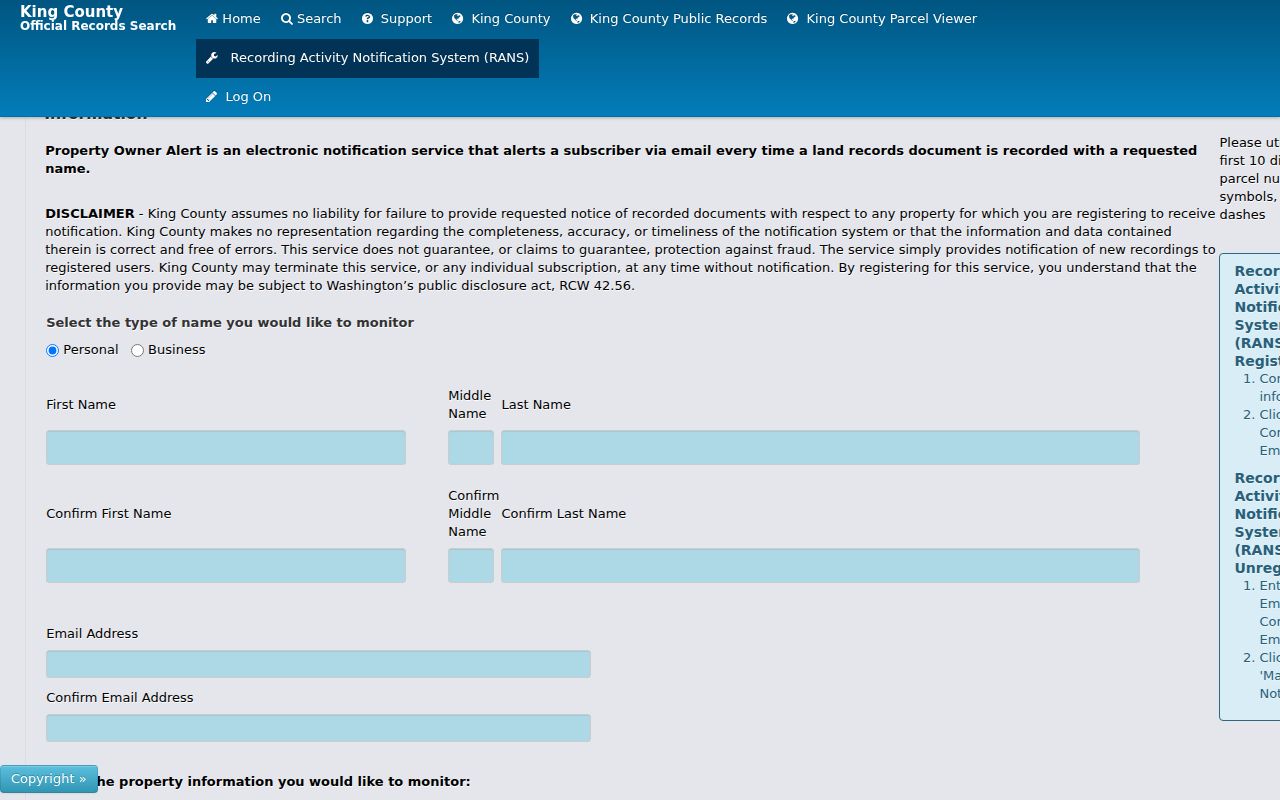
The free alert watches future matches and is not guaranteed. It does not replace the older grantor-grantee index or prove that a named party lived at the parcel.
Note: An index entry and a viewable document image are separate access points; record both before planning a copy request.
Union Hill-Novelty Hill Past Residents
Union Hill-Novelty Hill addresses may appear under Union Hill, Novelty Hill, Redmond, Ames Lake, Fall City Highway, Redmond-Fall City Highway, or a rural route. Road history also records PSH 2 by 1937 for the route now known as SR 202. Search each wording, but do not assume two labels are the same property until the parcel or legal description agrees.
A short plat, block and lot, or section-township-range description can bridge the change. Neighboring parcels, road intersections, map location, and a dated newspaper description provide supporting checks. The lack of an official local street-renumbering chronology makes these stable land identifiers especially important.
Union Hill-Novelty Hill Previous Residents
King County property cards at the Puget Sound Regional Branch cover a 1937-1972 series. A card may include a building photo or sketch, construction date, assessment details, and parcel clues. It may omit the full owner chain, so pair it with deed numbers and directory years rather than expecting one card to name all previous residents.
The Seattle Room collections provide a related property-research path with maps and regional sources.
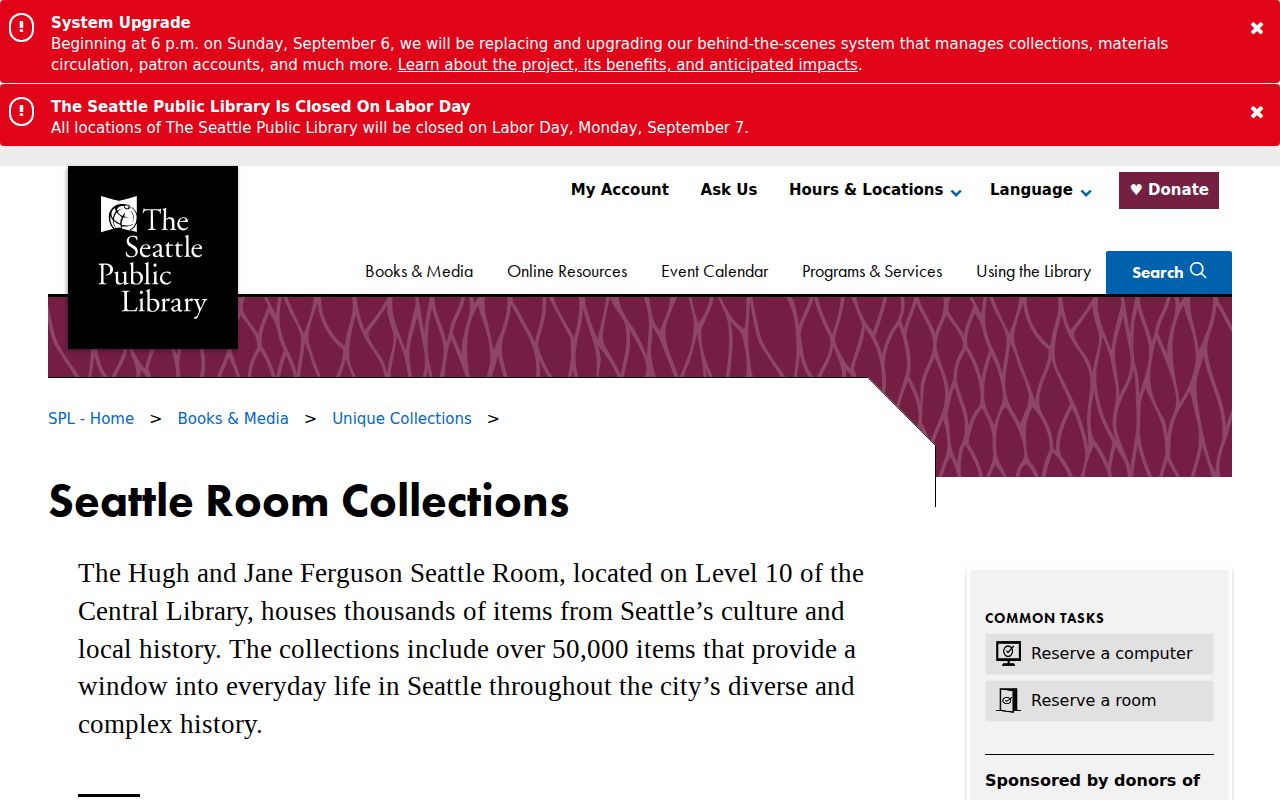
The library route is strongest when the parcel facts are already known. Staff can help connect an old route, map, or directory citation to the right archival series.
Union Hill-Novelty Hill Past Residents
Owners are only half the story. A directory may name a householder or business at an address, while a released census can show the rest of a household. Search the closest directory year on each side of a deed date, then compare the census enumeration, newspaper mentions, and assessment evidence. The collections and abbreviations are described on the Union Hill-Novelty Hill city directory page.
- Choose a deed or property-card date that anchors the parcel.
- Search nearby directory years under modern and historic place names.
- Use the nearest released census year and match road, neighbors, ages, and household members.
- Check newspapers, an obituary, probate index, or cemetery record for a later life event.
Novelty Hill Cemetery adds a local genealogy lead. Its association formed in 1901 and acquired land for one dollar. A cemetery or heritage record can lead to an obituary, county probate file, vital-record route, and then parcel context. It is not a complete resident list, so every name still needs a source and date.
Lawful use. Research previous residents for house history, family history, heirs, or personal curiosity. Never use an address trail to track, harass, or harm a living person.
East Redmond Changes the Trail
Records from 1956 through 1964 may use East Redmond, the short-lived municipality created during a gravel-pit dispute and later dissolved. Search East Redmond beside Union Hill, Novelty Hill, and King County. A city label from that period does not mean the record remains with a modern city office.
For one known historical property, search the address and party names in KCLS newspapers, the Redmond Historical Society, recorded documents, and archival court material. Keep the historical address separate from any claim about present occupants.
Grade Union Hill-Novelty Hill Previous-Resident Matches
A previous-resident trail is strongest when two independent records agree on name, place, and date. A deed plus a directory entry is better than either alone. A census household beside matching neighbors can resolve a rural route. A newspaper mention with no parcel link remains a lead.
| High confidence | Legal description, date, and name align across two record types. |
|---|---|
| Medium confidence | Name and area align, but the address or date is indirect. |
| Lead only | A same-name result lacks a parcel, route, household, or date bridge. |
Record “no result,” “not indexed,” “not online,” and “restricted” as different outcomes. The Archives copy-order route can resolve an inaccessible image, while a genuinely sealed or protected record requires respect for the limit.
Keep the current parcel report as the front page of the file. Then make one row for each prior transfer, with the grantor, grantee, date, recording number, legal description, and link or copy citation. Add a separate household row only when a directory, census, obituary, or other source supports it. This prevents an ownership sequence from being mislabeled as a resident sequence.
When an archive search is needed, provide the most exact name range and date range possible. King County Archives offers visits and copy orders, so an online cutoff is not the end of the trail. A scan citation should include the reel or series, page, and the date it was obtained. That level of detail lets another researcher test the match.